Apr . 03, 2024 09:52 Back to list
What Is Nearshoring and How Does Transportation Support It?
In the 1990s, offshoring became a trend among U.S. companies. With more affordable labor available abroad (primarily in China), some entities relocated factories to lower production costs and increase profits. Offshoring relies on shipping those products back overseas for sale in the United States.
For decades, this model was working. Then came the pandemic, and the resulting supply chain disruptions (especially for overseas shipments) began to poke holes in offshoring strategies. With products stuck overseas sometimes for months on end, the drawbacks of offshoring started to outweigh the benefits.
Lessons learned from the last few years have prompted some companies to bring operations back to North America, specifically to Mexico. Establishing production facilities closer to end markets minimizes the impacts of potential supply chain disruptions while keeping costs in check. This is the genesis of the nearshoring trend.
What Is Nearshoring?
Nearshoring is a business strategy that involves companies shifting their manufacturing and production operations closer to their main markets, allowing them to reduce transportation costs and deliver their products faster to customers. Specifically, over the past few years, some companies have begun shifting production from China to Mexico.
The Impact of Nearshoring in Mexico
The three main industries investing in Mexico are automotive, aerospace and appliances.
The nearshoring trend has led to an unprecedented business boom in Mexico, with $42 billion worth of foreign investments in the country announced during the first six months of 2023, including a new electric vehicle plant and new steel complex.
How Is the Transportation Industry Supporting Nearshoring?
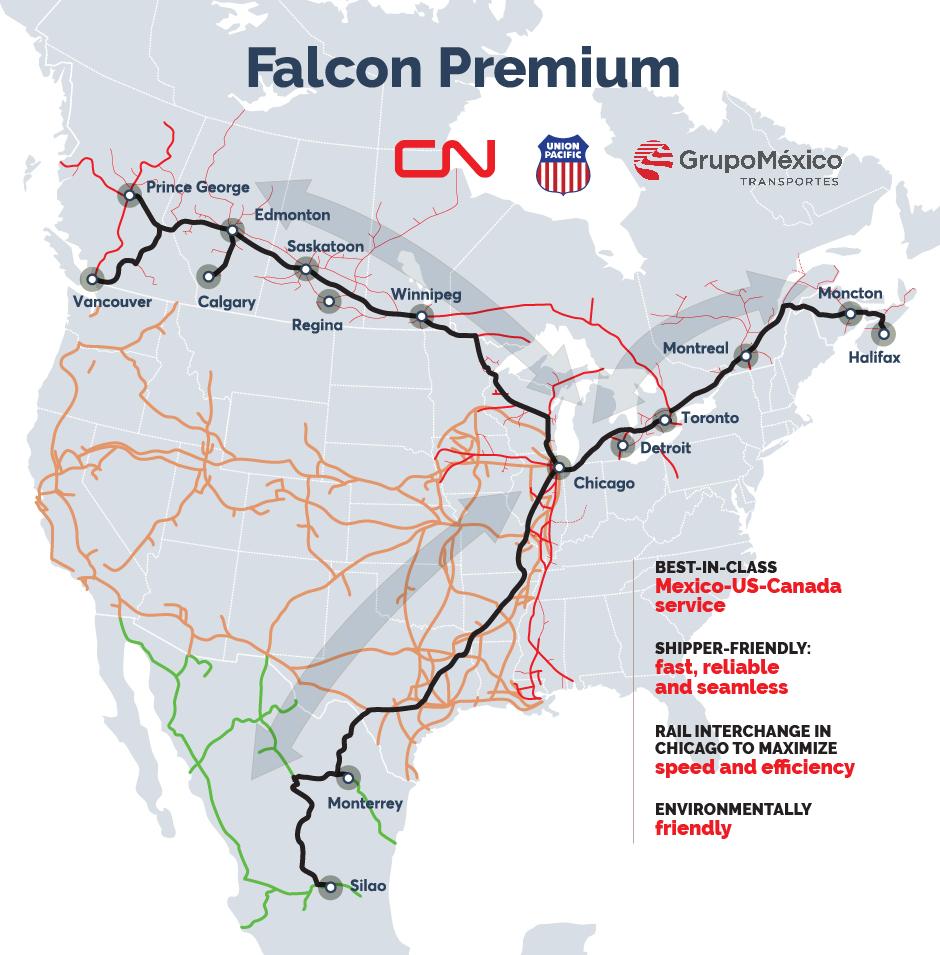
Part and parcel to the nearshoring trend is a greater demand for freight shipping across the U.S./Mexico border. As manufacturers establish new supply chains for products funneling into and out of new facilities in Mexico, they need affordable transportation solutions to have profitable nearshoring strategies.
Their primary choices are shipping by trains, trucks, or both using a process called intermodal shipping. Each shipping mode has benefits and drawbacks but when shipping products to and from Mexico, intermodal shipping can offer expedited transit times while bypassing congestion at the border and offering consistent capacity. If reliability is important, intermodal shipping may be your first choice. When capacity is strained, truck prices tend to skyrocket, so cost can become an issue as well.
Rail shipping and intermodal shipping tend to have a lower cost per ton mile compared to other sources of transportation, as well as available capacity, fewer delays at the border, and a carbon footprint that is 75% less than trucks. Overall, rail shipping and intermodal shipping offer a cost-effective, reliable and sustainable alternative to long-haul trucking. Using these shipping modes can help companies keep transportation costs from diminishing profits while also minimizing supply chain disruptions.
Two examples of best-in-class cross-border shipping services that deliver these benefits are Union Pacific Railroad’s Eagle Premium and Falcon Premium intermodal services.
Eagle Premium
Union Pacific’s Eagle Premium intermodal service ships products to Mexico by rail and bypasses congested border crossings, reduces transit time. Working with Grupo México Transportes (GMXT), Eagle Premium delivers seamless intermodal service six days per week between Chicago and Monterrey, Mexico, with expanded service from Monterrey to Los Angeles and Lathrop, California, and Seattle, Washington. Eagle Premium can also service destinations in the Northeastern United States by interchanging with Class I railroads in Chicago.
Falcon Premium
Falcon Premium intermodal service offers the fastest, most direct rail service between Canada and Mexico. By connecting Canadian National, Union Pacific, and Grupo México Transportes (GMXT) to provide uninterrupted service, Falcon Premium allows shippers to maximize freight weights in Canada and Mexico, decrease transit times, and reduce carbon emissions by limiting the use of truck shipping.
What Investments Have Railroads Made to Support the Nearshoring Trend?
Although nearshoring in Mexico may seem like an emerging trend, Union Pacific Railroad has been preparing for production and manufacturing growth in Mexico for years. Because of the railroad’s investments, it is uniquely positioned to support customers implementing nearshoring strategies in Mexico and across North America.
Preparing for Mexico nearshoring growth includes investing in intermodal terminal capacity and developing industrial parks and premium cross-border services to provide fast, quality export/import service to customers. Union Pacific is the only railroad with access to all six major gateways on the southern border, allowing the railroad to provide unmatched cross-border shipping.
In 2022, Union Pacific invested $600 million in capital investments to support growth, with similar levels of investment expected this year.
Key investments include:
- Increasing systemwide terminal capacity by 10% since 2021
- Prime Pointe Industrial Park, a new development near the Dallas/Fort Worth area and Union Pacific’s Dallas Intermodal Terminal
- The Twin Cities Intermodal Terminal, which opened in 2021 in Minnesota and expanded customers’ reach in Upper Midwest markets by offering intermodal service between the Twin Cities and Los Angeles and Seattle.
- The Inland Empire Intermodal Terminal, which opened in 2021 to provide customers in the warehouse district in Southern California transportation solutions to Chicago markets
- Technology that gives trucks fast gate access at Union Pacific intermodal terminals through the UPGo app, which tells them exactly where to pick up their loads in intermodal yards.
-
Which Railroad Provides the Best Cross-Border Transportation Services for Nearshoring?
Union Pacific Railroad’s cross-border service is second to none for the following reasons:
- Unrivaled gateway access: Union Pacific serves six major gateways on the southern border: Brownsville, Laredo, Eagle Pass, El Paso, Nogales and Calexico.
- Experience and support: Union Pacific has a thirty-plus-year presence in Mexico, with in-country bilingual sales forces located in Mexico City and Monterrey.
- Transit time: Union Pacific offers the shortest physical distance between Mexico and Canada, compared to other rail networks.
- Industrial development opportunities: More than 2,000 shovel-ready acres available for development at our strategically located industrial park near the Dallas/Fort Worth area.
Learn More
To learn more about intermodal shipping to and from Mexico or beyond, answer a few questions about your freight shipment(s) and an expert will be in touch. Or reach out directly to the Union Pacific Mexico team to talk about cross-border shipping.
 Arabic
  English
  Afrikaans
  Albanian
  Amharic
  Armenian
  Azerbaijani
  Basque
  Belarusian
  Bengali